For over a decade, scaling a B2B software venture followed a clean, predictable rhythm: charge a fixed monthly fee per seat, deliver consistent value, and watch your gross margins improve as your client base grew. It gave founders clear forecasting, and it gave enterprise buyers budget certainty.
Then came generative AI.
Over the past two years, software providers embedding AI models into their workflows have found themselves in a frantic pricing scramble. They are bouncing between freemium hooks, premium add-ons, seat upgrades, and variable consumption pricing based on raw compute tokens.
On paper, shifting from traditional seat licenses to charging per conversation sounds like a natural upgrade path. In reality, for many software vendors, it has been a defensive reaction to offset skyrocketing compute token costs while traditional user headcount shrinks.
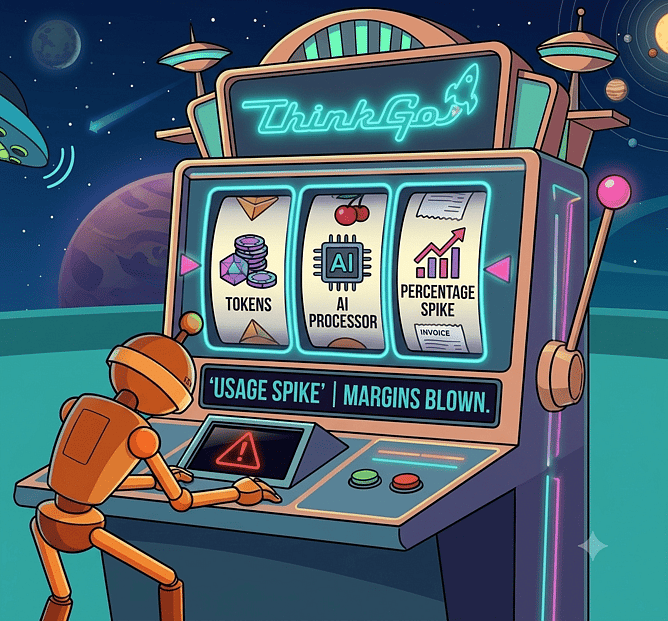
When you build on top of hosted large language models across AWS, Google, or Microsoft, you are underwriting someone else's infrastructure. When token prices fluctuate or usage spikes unexpectedly, your gross margins take the hit.
The Tokenmaxxing Trap
To recover compute expenses, software vendors rushed to introduce variable usage billing linked directly to token consumption. But that introduced an unexpected dilemma: corporate employee behaviour.
Driven by internal adoption targets and executive pushes to demonstrate AI productivity, employees began flooding LLM models with token-heavy queries for routine, minor tasks. By mid-2026, this trend—known as "tokenmaxxing"—caused corporate technology budgets to explode. Enterprise finance departments watched annual technology budgets evaporate in a matter of weeks, leading executives to issue strict token caps and ban high-cost AI coding tools outright.
This puts mid-market software companies in a dangerous middle ground:
The Margin Squeeze: If you stick to flat subscription fees, unmonitored AI usage eats your product margins alive.
Customer Friction: If you pass variable token costs straight to buyers, enterprise finance teams respond by capping usage or cutting seats.
Chasing market hype with reactive pricing changes will not fix structural revenue leaks. If your revenue model relies on unpredictable usage that your customers actively try to restrict, your unit economics are built on shifting sand.
Building a Sustainable Monetisation Strategy
At ThinkGo, we help tech leaders navigate the bumpy transition from initial traction to sustainable global scale. Moving through this phase with confidence requires diagnostic discipline around your true cost-to-serve before you introduce complex variable billing layers that alienate users.
To insulate your software business from volatile LLM costs and enterprise budget freezes, consider three structural principles:
Decouple Value From Compute: Do not bill purely on raw token consumption. Tie your pricing to defined outcomes or completed workflows, such as processed invoices, resolved support tickets, or verified reports.
Offer Hybrid Guardrails: Structure tiered subscription packages that include generous baseline AI capabilities alongside predictable overage bands. This gives corporate buyers the budget certainty they demand while protecting your business from runaway compute expenses.
Maintain True Cost-to-Serve Visibility: Run regular internal diagnostics on how different customer segments consume model bandwidth. You cannot price an autonomous AI agent sustainably if you do not know its exact unit margin across light, medium, and heavy usage profiles.
Building a business that survives and scales requires getting the underlying strategy right. The SaaS companies that thrive in this next era will not be those passing raw compute volatility onto their customers, but those designing clear, value-aligned models that protect margins while delivering unmistakable returns.